“Pilates” has become one of the most stretched words in the fitness industry.
It applies, simultaneously, to a rigorous one-on-one session with a classically trained instructor on a Reformer; to a sold-out group class moving through choreography on sixteen machines at once; and to a twenty-person megaformer studio with the lights low and the music loud. These are not variations on the same experience. They are fundamentally different things – with different philosophies, different outcomes, and different levels of individual attention.
If you’re making a decision about where to invest your time and your body, the distinction matters. This is a guide to understanding it.
Where Pilates Began – and What Joseph Pilates Actually Intended
Joseph Pilates developed his method – which he originally called “Contrology” – in the early twentieth century, drawing on his background in gymnastics, boxing, and anatomical study. His intention was precise: to build whole-body strength and coordination through controlled, deliberate movement, breath, and alignment.
The method was not a fitness trend. It was a complete system: specific exercises, specific sequencing, specific apparatus, all designed to work together. Pilates taught out of a New York studio for decades, working closely with dancers, athletes, and anyone seeking serious rehabilitation or conditioning.
When he died in 1967, his work was carried forward by a group of students who had trained under him directly – known collectively as the “Pilates Elders.” These were the individuals entrusted with preserving the integrity of the method. What they passed on, and to whom, forms the foundation of what we call classical Pilates today.
The lineage matters because the method is only as reliable as the people who teach it. When that thread of knowledge is diluted – through abbreviated training, rebranded formats, or the removal of foundational principles – what remains may carry the name, but not the substance.
Classical Pilates – The Method as Joseph Pilates Designed It
Classical Pilates is taught as close to the original as possible: the original exercises, the original sequencing, the original apparatus. The fidelity is intentional. The system was designed as a whole, and altering its structure changes how it functions.
One of the most significant figures in the classical tradition is Ron Fletcher – a dancer and choreographer who studied directly under Joseph and Clara Pilates, and who went on to become one of the most distinguished teachers in the method’s history. Fletcher’s particular contribution was an expanded attention to breath – specifically the percussive breathing technique that bears his name – and to the quality of movement as an expressive, coordinated whole.
The Fletcher lineage, like all classical Pilates, is characterized by its commitment to the body as a unified system. Nothing is isolated. Every exercise connects breath to movement, stability to mobility, the small muscles to the large ones. The work is slow, deliberate, and demanding in ways that are not always visible from the outside.
A classical Pilates session looks different from what many people encounter in group fitness settings. It is quieter. More attentive. Progression is earned rather than assumed. And the instructor’s role is not to lead a sequence – it is to observe, assess, and respond to the specific person in front of them.
Contemporary Pilates – The Method, Evolved with Intention
Contemporary Pilates encompasses approaches that have updated the original method by incorporating decades of additional biomechanical and rehabilitative research. The most reputable frameworks – STOTT Pilates (now Merrithew), Basasi, and Balanced Body – represent rigorous, evidence-informed evolutions of the work.
These are not weekend certifications. What distinguishes the serious contemporary training programs is the depth and duration of what they require:
- Significant classroom hours covering anatomy, kinesiology, and methodology
- Supervised teaching hours working directly with clients under observation
- Observation hours studying experienced instructors across a range of clients and conditions
- Written and practical exam components at multiple levels
- A certification process that unfolds over years – not days
A single exam does not grant full certification in these programs. Comprehensive knowledge is built in levels – mat work, Reformer, Cadillac, Chair, Barrels – each requiring its own coursework, practice, and examination. The complete process demands years of committed study.
The result is an instructor who understands not just what to teach, but why – and critically, what not to teach, and when. That judgment – knowing how to modify for an injury, how to progress safely, how to protect a client from what is inappropriate for their specific circumstance – cannot be compressed into a short-form program.
Classical and contemporary Pilates differ in philosophy and approach, but they share the same foundational values: rigorous instructor training, individual attention, and a deep respect for how the body actually works. That shared foundation is what places them in a different category from what follows.
Trending Formats – What They Are, and What They’re Not
The past decade has seen a significant expansion in formats that carry the Pilates name – or at least the visual vocabulary of it – while operating on an entirely different set of principles.
The Megaformer and Lagree Method
The Megaformer was developed by Sébastien Lagree – a trademarked machine and exercise protocol built around high-intensity, interval-based group training. The machine shares a silhouette with the Reformer: a spring-loaded carriage, arm straps, foot straps. The method is not Pilates. It is a distinct, demanding fitness format that emphasizes muscular endurance and cardiovascular intensity in a group setting.
Because Lagree has trademarked his machine and his exercises, studios that use similar equipment without a formal licensing agreement with Lagree cannot legally call themselves a Lagree or Megaformer studio. As a result, many of these studios call themselves Pilates studios – not because the method is equivalent, but because no other name is available to them.
This is worth understanding. When a studio describes itself as Pilates but the class is high-intensity, interval-based, set to music, and conducted in a group of fifteen or twenty people – you are likely in a Megaformer-adjacent studio, not a traditional Pilates environment.
The Question of Instructor Certification
The proliferation of trending formats has coincided with a significant dilution in what Pilates certification can mean. Weekend programs, online-only certifications, and abbreviated courses now issue credentials that carry the same title as comprehensive multi-year training.
The gap between these pathways is substantial. A comprehensively trained instructor can:
- Assess how an individual moves and identify compensations
- Understand the muscles involved in each exercise and their specific actions
- Modify intelligently for injuries, surgeries, or special populations
- Build a progressive, individualized program based on specific needs and goals
- Recognize when an exercise is contraindicated – and choose a safer alternative
An instructor trained over a weekend has been taught a sequence and some cues. The knowledge required to watch someone move, assess what’s happening, and respond with precision takes years to develop. If the foundational training isn’t there, that skill set cannot exist – regardless of what the certificate says.
This is not a criticism of anyone choosing these formats as a workout. It is a clarification of what you are and are not receiving when you walk through the door.
Group Classes vs. Private Instruction – Where the Results Actually Come From
Even within traditional Pilates – classical or contemporary – there is a meaningful difference between group reformer classes and private instruction. It is worth being direct about what that difference produces.
In a group class, the instructor is managing a room. Cueing is necessarily general – designed to apply to the broadest range of people present. An instructor cannot simultaneously observe what twelve individuals are doing with their breath, their alignment, their compensating hip, their posture history. Corrections, when they come, are usually verbal and brief.
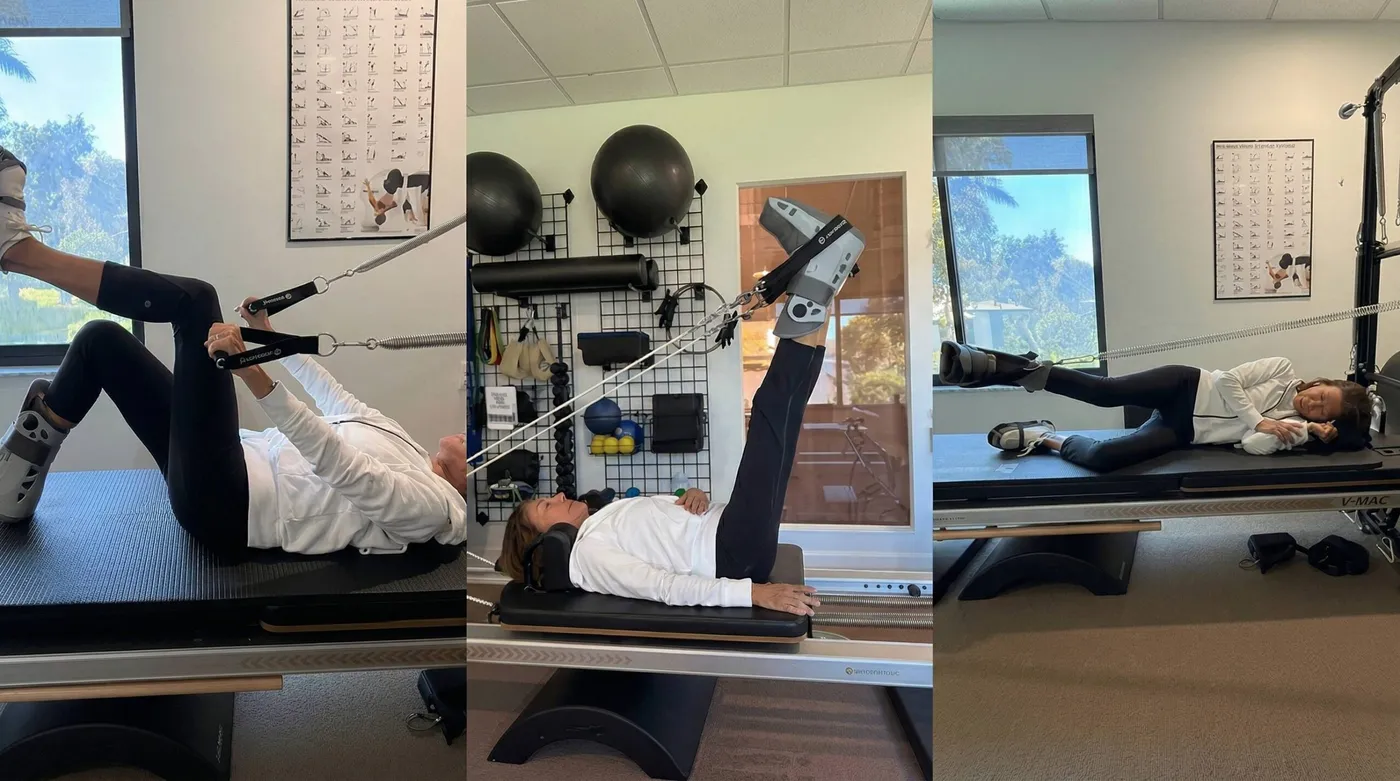
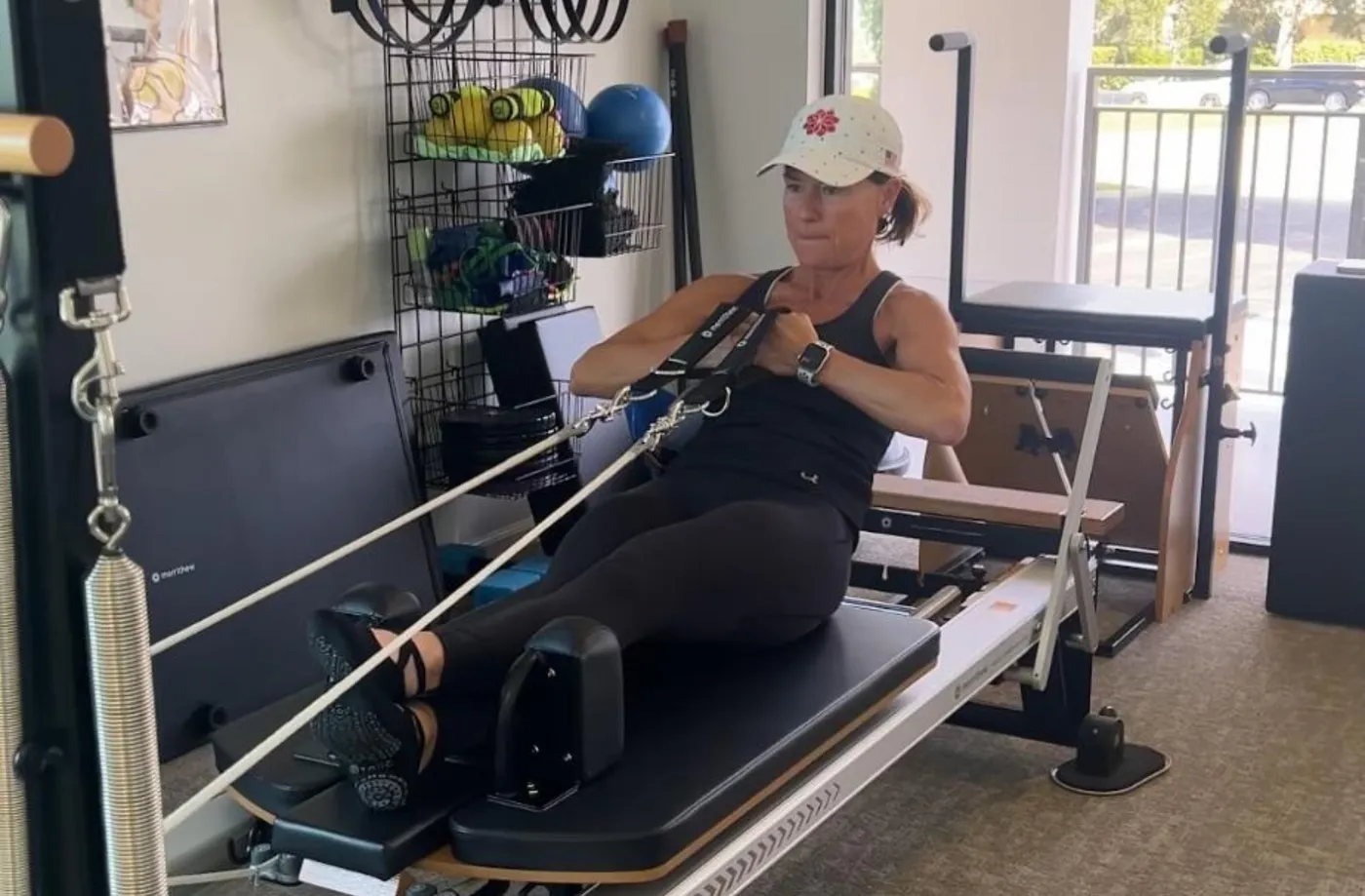
In a private session, the instructor’s entire attention is on one person. They can see what’s actually happening: where the body is compensating, where strength is developing, where the breath is disconnected, where progression is appropriate and where it isn’t. That level of observation allows for the kind of real-time adjustment that changes how the body moves – not just during the session, but over time.
The compounding effect of this is significant. A client who trains privately with a skilled instructor builds a practice that is genuinely theirs – calibrated to their body, their history, and their goals. The results are more specific, more durable, and achieved more efficiently than what group training can produce.
For clients managing injuries, recovering from surgery, working with postural imbalances, or pursuing specific performance outcomes, private instruction is not a premium option. It is a prerequisite for training that is both effective and safe.
So – Is It Pilates? Questions Worth Asking Before You Commit
The word “Pilates” on a studio’s sign or website tells you relatively little on its own. These questions will tell you considerably more:
- Is the instructor certified – and through which program? How long did that certification take?
- Does the studio offer private instruction, or only group classes?
- Is programming individualized to each client, or does everyone follow the same sequence?
- Is the format interval-based and high-intensity, or is it controlled, sequential, and breath-driven?
- Does the instructor observe and correct individual movement, or deliver general cueing to the room?
The answers will quickly clarify whether you’re looking at a serious Pilates practice or a branded fitness format that has borrowed the name.
Private Pilates in Naples – Where the Method Is the Point
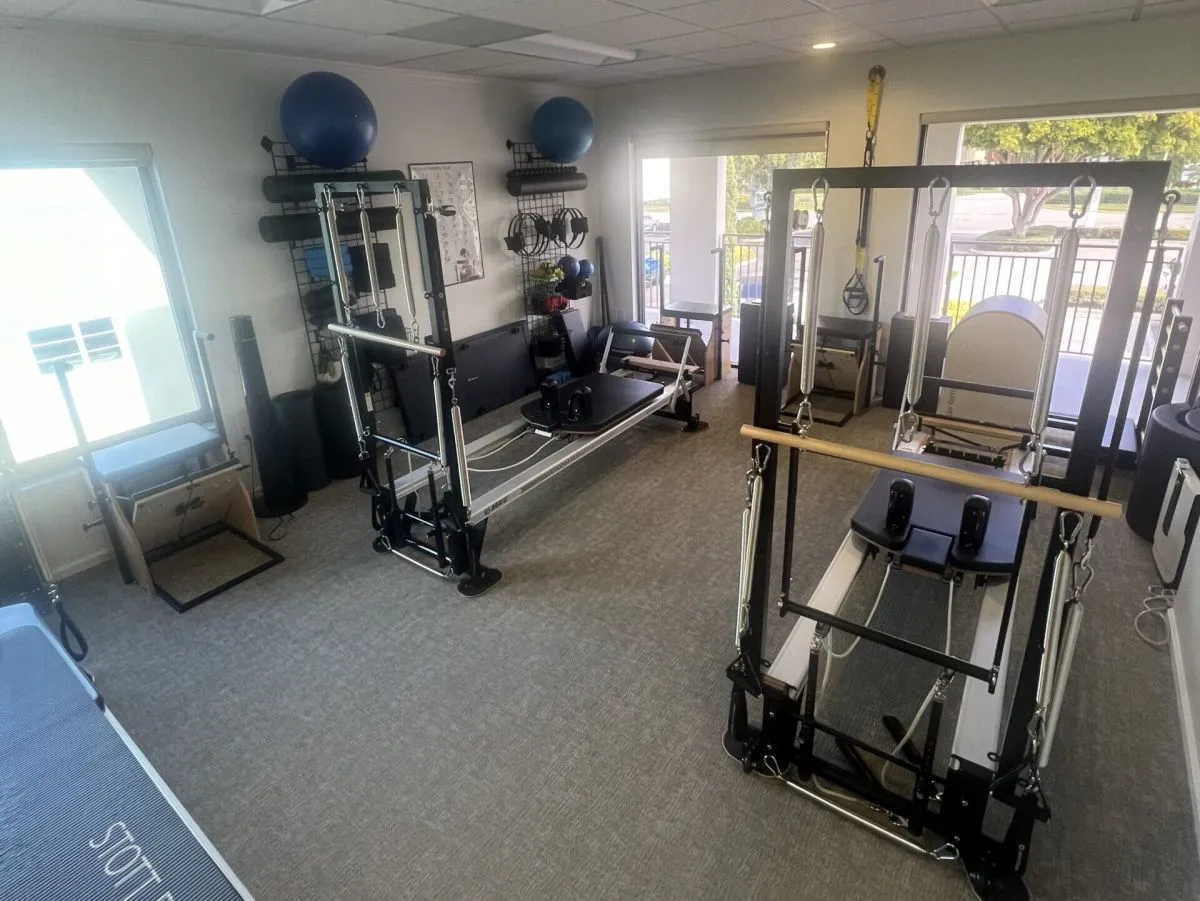
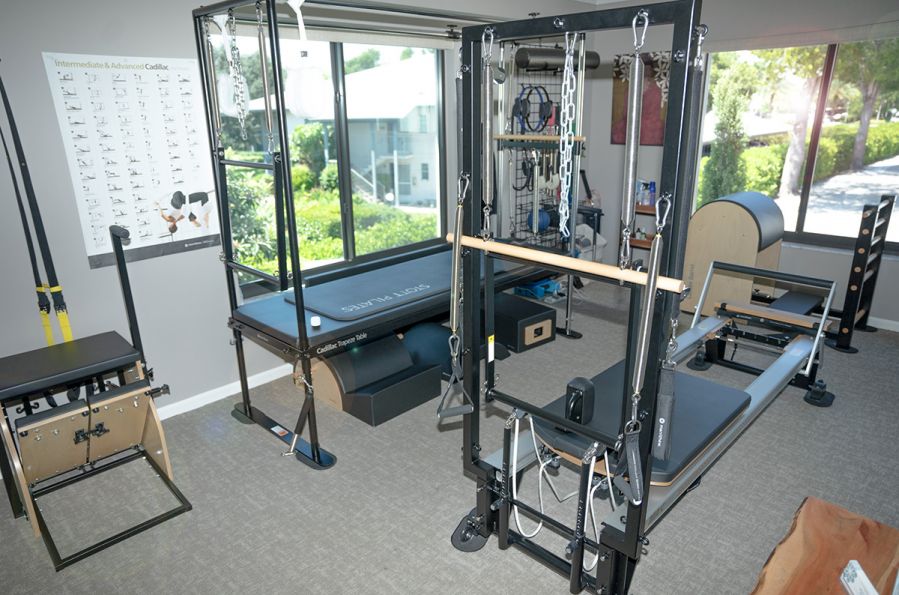
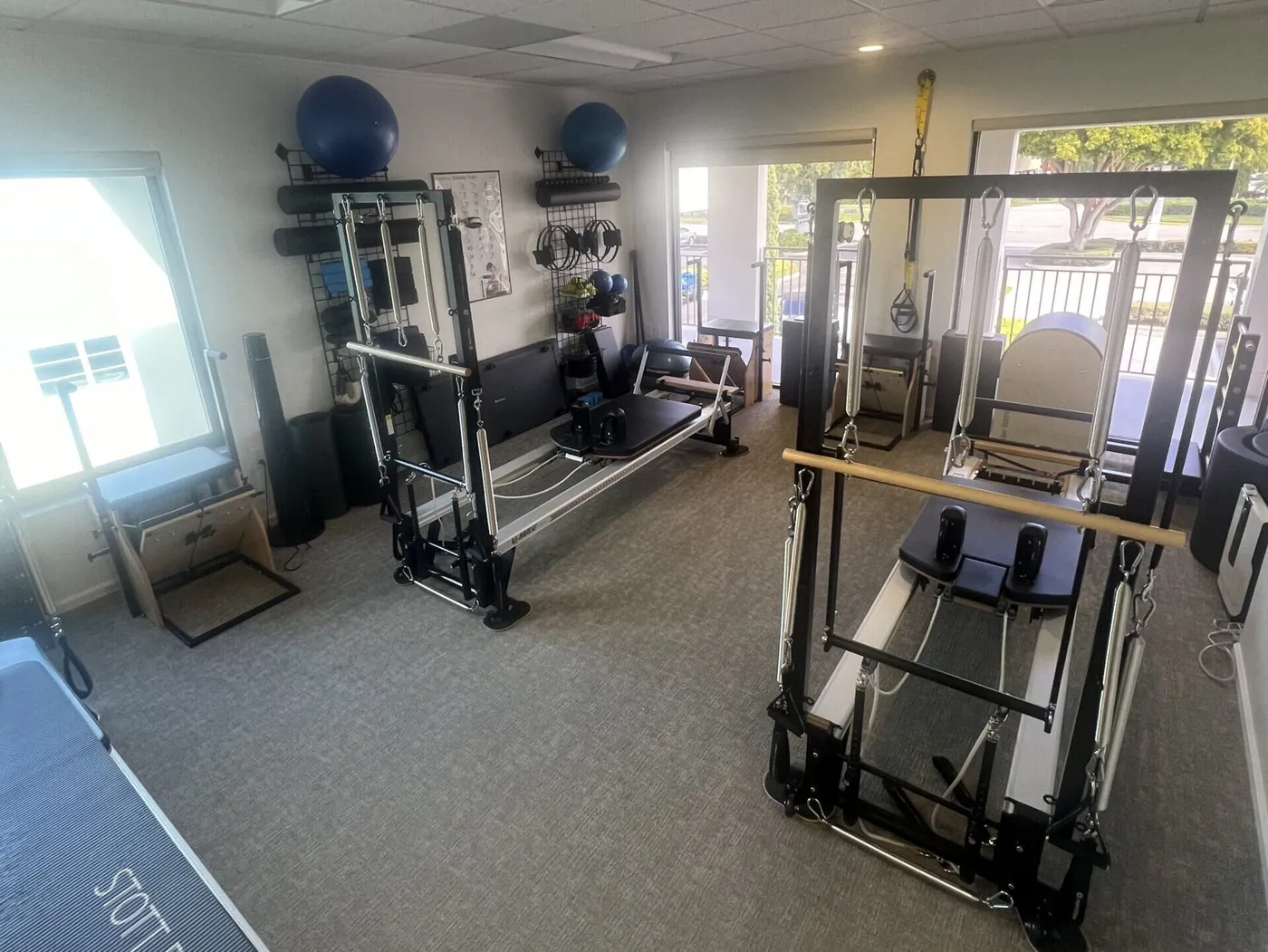
At The Pilates Firm, the method is not a marketing term. It is the foundation of everything that happens in the studio.
Every session is private. Every client works with an instructor whose comprehensive training spans years – not a weekend – and whose full attention, from the first minute to the last, is on the quality of your movement, the specificity of your goals, and the intelligence of your progression over time.
Whether your background is classical, contemporary, or you’re simply ready for something more precise than what you’ve experienced before – this is where serious Pilates is practiced.