Author: David Magaña

What is Reformer Pilates? The Truth on this Popular Workout

Key Takeaways: 

The Reformer is one of many pieces of equipment utilized in a Pilates Studio to improve strength, flexibility, coordination and balance.

  • Pilates on The Reformer provides a low-impact, full-body workout. 
  • The reformer utilizes springs for resistance. The goal is to build strength, improve mobility, balance, flexibility and coordination by performing specific and controlled exercises.
  • Pilates on The Reformer improves core strength, posture, flexibility, and balance without high-impact stress, making it ideal for active adults and seniors.
  • Pilates on The Reformer is ideal for rehabilitation and injury prevention because certified instructors tailor resistance and movement patterns to individual needs.
  • Sessions are personalized and progression-based, whether you choose private or small-group training in Naples.
  • The result of Pilates on The reformer is functional, long-term strength which supports your lifestyle and activities of daily living.

What Exactly is Reformer Pilates?

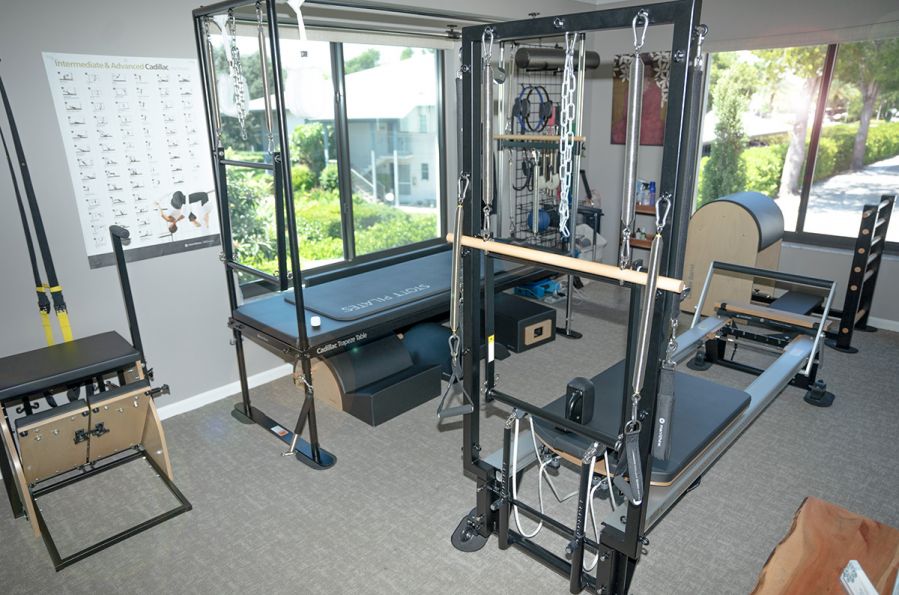
The Reformer is one of many pieces of equipment utilized in a Pilates Studio. (The Cadillac, The Split Pedal Chair, The Tower, The Ladder Barrel, The Spine Corrector, The Arc Barrel and various small props are all essential to an authentic Pilates equipment based work out session.)

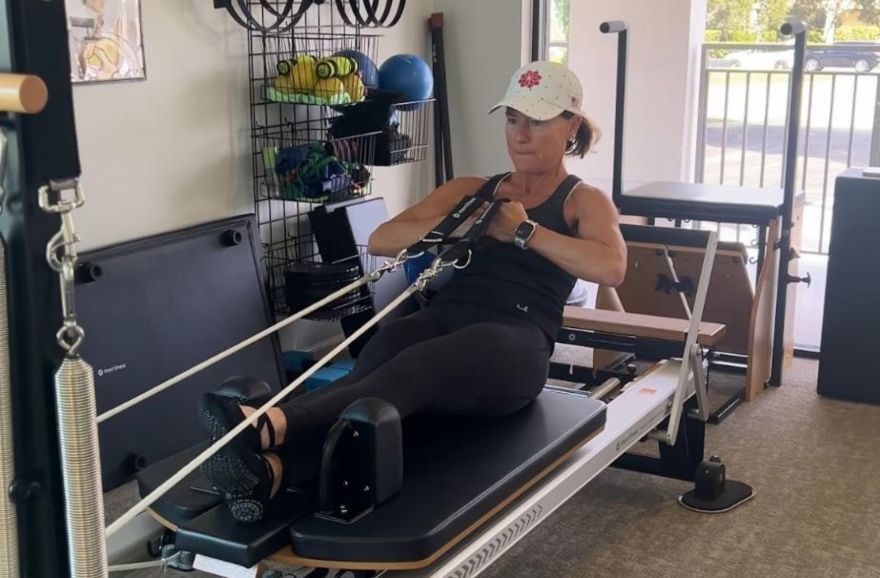
Specifically, The reformer has a sliding carriage, is spring loaded, has foot loops, hand loops , a foot bar and is utilized to deliver a full body resistance based work out.

A certified instructor cues a client to perform various Pilates movements on the Reformer yielding strength, stability, flexibility and coordination.

Pilates exercises are performed slow, with cues to match the breath with the motion.

Pilates exercises utilize mind body awareness. Form, connection and control of The Reformer or any of the machines (apparatus) you are working on is imperative to proper Pilates instruction and execution of the exercises.

Pilates isn’t a trend. It’s been around since the 1920s. Pilates is one of the fastest-growing workout formats in the U.S., with participation climbing nearly 40% since 2019 as more people seek sustainable strength, mobility, and total-body wellness. In this article, you’ll learn:

  • What reformer Pilates is and how the machine actually works
  • How does it compare to mat pilates and traditional strength training
  • The physical and performance benefits, from core stability to rehabilitation
  • Why reformer Pilates is ideal for seniors, athletes, and active adults in Naples
  • What to expect in your first session
  • Answers to the most common beginner questions

If you’re wondering if working on the Reformer is right for you.. this article will inform you of what Pilates on the Reformer is all about so that you can make an informed decision to book a session and feel what this workout can provide for you.

What Is Reformer Pilates, And How Is It Different?

Mat Pilates, originally developed by Joseph Pilates nearly a century ago, is the fundamental basis and foundational building block of equipment-based Pilates. The Reformer is one of the machines utilized in equipment-based Pilates.

Both Mat and Equipment-based Pilates share the same fundamentals: control, precision, breath, alignment, and flow.

Working on the Reformer builds on the fundamental principles learned in Mat Pilates.

It is important to learn the mat work principles and fundamentals before doing Reformer or equipment-based Pilates.

These fundamentals teach the foundational understanding, the mind-body awareness, and the core connection necessary to perform the exercises on the Reformer correctly.

Mat work should be understood prior to equipment training – if you’re new to Pilates, the fundamentals are a necessary building block to equipment training.

1) The Pilates Reformer Machine Explained

The reformer includes:

  • A sliding carriage that moves along rails
  • Adjustable springs that control resistance
  • A foot bar for pressing and stability
  • Straps for upper- and lower-body work

Because the resistance is spring-based, you are strengthening as you lengthen. Pilates promotes long, lean muscles. The resistance is light to moderate, which incorporates core, hip, and back stability while working arms and legs simultaneously.

The resistance of the carriage is changed to accommodate and support movement. Sometimes, a lighter spring is used to promote core stability, whereas a heavier spring with the same exercise promotes gross motor strength in the larger muscles, such as the arms or legs.

The variations are numerous. The combination of exercise, spring load, and range of motion allows a certified instructor to achieve a specific intent and result with each exercise choice on the reformer.

These considerations are based on client needs. The programming is individualized and specific to the goals set forth, the participant’s history, and any necessary modifications or contraindications identified during the initial session.

2) Reformer vs. Mat Pilates

Mat Pilates is the fundamental foundation of equipment-based Pilates, which includes the Reformer.

A series of exercises is performed to strengthen the core, the hips, the back, and the shoulder girdle. Postural awareness and core strength are most important to the foundational layering in Pilates.

The rules or fundamentals of Pilates are taught in Mat.  These fundamentals are the basis for Equipment progression.

The equipment, such as the Reformer, adds resistance to the Mat fundamentals and core strength learned in Mat Pilates.

The Reformer supports strengthening in layers. In equipment training, we strengthen from the inside out, all layers working together. Both stability and mobility share the workload. Resulting in strong, stable, and flexible musculature.

3) Why It Feels Different From Traditional Workouts

Many first-timers expect a light stretching session. Instead, they discover a deeply challenging workout focused on slow, controlled tension.

There’s no momentum. No rushed reps. No joint pounding. Every movement is deliberate. Muscles engage through a full range of motion, which improves posture, balance, and functional strength. Pilates is an intelligent method of training. You must be focused, connected, aware, and tuned in to do it correctly.

An experienced and certified instructor is imperative to your success and guidance.

What Are the Health Benefits of Reformer Pilates?

Pilates on The Reformer is a safe, non-impact form of exercise designed for postural awareness and strength that will support activities of daily living and help stabilize the back, shoulders, and hips.

As we age, the body naturally breaks down. Pilates exercises strengthen muscles and stabilize joints, supporting bone health as we age.

Pilates is a form of exercise that can be performed at any age. There are many 90-year-olds doing Pilates. They are working on The Reformer to counter the natural process of aging.

1. Stronger Core Muscles Without Strain

The reformer adds resistance to the layers of abdominal stability taught in Mat.

The workout is supportive yet challenging.

The instructor cues the breath and the movement patterns to be performed with slow and deliberate intent.

That translates directly into:

  • Better posture
  • Reduced back discomfort
  • Improved balance
  • Greater stability in everyday movement

For golfers, tennis players, and pickle ballers in Naples, Pilates on The Reformer improves core stability, rotational power, coordination, and balance.

2. Improved Mobility and Joint Health

Unlike high-impact workouts, reformer Pilates emphasizes controlled lengthening and strengthening simultaneously. The spring resistance supports joints rather than compressing them.

This is especially important for:

  • Adults managing arthritis
  • Clients recovering from joint replacements
  • Those experiencing stiffness from sedentary habits

Over time, clients feel stronger, more flexible, and regain shoulder, hip, and spinal mobility that years of living without Pilates have affected.

3. Low-Impact, High-Precision Strength

Many people assume low-impact means low-intensity. On the reformer, that’s not the case.

Because resistance is provided by adjustable springs, muscles work continuously through a full range of motion. Fatigue is met by loading and a continuous flow of exercises.

The result? A full body workout that makes you feel energized, taller, more stable, and balanced.

4. Rehabilitation and Injury Prevention

Reformer Pilates was originally developed as a rehabilitation method. That legacy still matters.

The machine allows instructors to:

  • Control resistance precisely
  • Modify movement patterns
  • Strengthen weak or imbalanced areas
  • Reduce compensation patterns

For those returning from surgery or managing chronic pain, this level of control makes reformer Pilates a safe choice to strengthen your body.

5. Performance Enhancement for Active Adults

Reformer Pilates restores and enhances function.

The exercises chosen in a Pilates session improve strength,  coordination, flexibility, and proprioception (body awareness). The controlled resistance builds balanced strength across muscle groups.

That’s why:

  • Golfers improve swing control
  • Runners enhance stride efficiency
  • Tennis players improve shoulder stability
  • Pickle ballers improve balance and coordination
  • Active older individuals maintain independence in activities of daily living

The results with Pilates are undeniable.

You will develop stronger muscles, you will promote stability in your joints, you will improve balance, and you will be challenged at the neuro-muscular coordination level.

What to Expect in a Reformer Pilates Exercise Session

If you’ve never stepped into a reformer studio before, the equipment can look intimidating. 

A well-run Pilates studio session is structured, supportive, and highly personalized, especially in a boutique environment.

1) The First Session

Your first session typically begins with a brief conversation about your goals, injury history, and movement background. 

This isn’t a rushed check-in. It’s how your instructor determines appropriate spring tension, range of motion, and exercise selection.

From there, you’ll move through a controlled sequence that emphasizes alignment, breath, and precision. Early exercises are often performed lying down to build core strength, muscular connection, and postural alignment.

As sessions progress, you are met with tension adjustments, surface and positional changes, coordination and balance challenges.

All of these challenges are cued with specific alignment, form, and muscular recruitment.

The movements are deliberate, slow, and controlled.

2) How the Session Progresses

A standard session flows through three phases:

First, activation. Smaller, controlled movements engage deep stabilizing muscles and prepare the body for load.

Second, strength and mobility work. This is where resistance increases, and full-body integration begins. Legs, glutes, back, shoulders, and core work together under spring tension.

Finally, integration and lengthening. The session closes with exercises that reinforce alignment and flexibility, allowing the body to absorb the work rather than leaving it overstimulated.

Clients often describe the feeling afterward as “taller” or “lighter,” even though they’ve completed a demanding strength session.

3) Private vs. Small-Group Training

In Naples, many clients prefer private or semi-private reformer sessions. This allows for:

  • Immediate form correction
  • Customized resistance adjustments
  • Programming tailored to personal goals

Private Pilates instruction is especially valuable for active retirees, post-rehabilitation clients, and athletes refining movement mechanics. The precision of reformer Pilates depends on subtle adjustments, and that level of attention matters.

4) What It Feels Like

Reformer Pilates is controlled, not chaotic. You won’t leave drenched in sweat from cardio bursts. Instead, you’ll feel muscular engagement in places traditional workouts often miss: deep in the core, along the spine, and around the hips and shoulders.

It’s strength without compression. Intensity without impact. Challenge without punishment.

That’s why so many Southwest Florida residents choose it as a long-term fitness foundation rather than a short-term trend.

Frequently Asked Questions About Reformer Pilates

Here are common questions about reformer Pilates.

1) Is reformer Pilates good for beginners?

Yes. Reformer Pilates is highly adaptable, which makes it ideal for beginners. The spring resistance can be adjusted to provide support while you build strength and coordination. In a private or small-group setting, exercises are modified to match your current fitness level.

2) Is reformer Pilates hard?

It can be challenging, but it isn’t chaotic or high-impact. The difficulty comes from controlled tension and precision, not speed. Most clients in Naples are surprised by how deeply the muscles engage without feeling joint strain.

3) Is reformer Pilates better than mat Pilates?

Mat work is the foundational basis for The Reformer. 

It is imperative to learn, understand, and connect the mat work fundamentals to your mind and body before Reformer Training.

The basis of core strength and connection is important for back stability as you progress to the reformer. This awareness allows for the layering of abdominal activation and strengthening as a foundation for the resistance introduced on the equipment.

4) Can reformer Pilates help with weight loss?

Reformer Pilates supports weight loss by building lean muscle, improving posture, and increasing overall movement efficiency. 

Resistance training, such as Reformer Pilates, is one piece of the weight-loss goal. 

The other pieces include proper nutrition and cardiovascular training.

5) Is reformer Pilates safe after surgery or injury?

In many cases, yes, and it was originally designed for rehabilitation. However, clearance from your physician is important. 

The adjustable resistance and controlled movement patterns make reformer Pilates a strong option for joint replacements, back pain, and post-rehabilitation strength rebuilding when guided by a certified instructor.

6) How often should I do reformer Pilates?

Two to three sessions per week produce noticeable improvements in strength and mobility. Many clients in Southwest Florida maintain long-term results with two weekly sessions. 

Even once per week can make a difference when paired with an active lifestyle.

7) What should I wear to a reformer Pilates session?

Wear fitted, comfortable clothing that allows a full range of motion. 

Layers are helpful for temperature control.

Grip socks are recommended for safety and hygiene. 

Avoid loose garments, skirts, belts, and jeans.

Men should wear fitted shorts under loose shorts for obvious reasons.

8) How much does reformer Pilates cost in Naples?

Pricing varies depending on whether you choose private, duo, or trio sessions. Boutique studios typically charge more than large-group fitness classes because sessions are personalized and instructor-led. The investment reflects individualized programming and expert supervision.

9) Is reformer Pilates good for seniors?

Yes. The low-impact nature and customizable resistance make it especially beneficial for active seniors who want to maintain mobility, balance, strength, and independence. 

Ready to Experience Reformer Pilates in Naples?

Reading about reformer Pilates is one thing. Feeling it is something entirely different.

At The Pilates Firm in Naples, every session is designed around precision, safety, and measurable progress. Whether you’re an active retiree maintaining mobility, a golfer refining rotation, or someone rebuilding strength after injury, reformer Pilates offers a smarter way to train.

We specialize in Private training, with a focus on individual safety and progress.

If you’re ready to experience how reformer Pilates can strengthen your body without stressing your joints, try it and see the difference for yourself. Schedule your session now!
Private Pilates: Top Benefits of One-on-One Pilates Training

Key Takeaways: 

  • Private Pilates provides fully personalized, one-on-one instruction, allowing each session to be customized to your body, goals, and movement history.
  • Focused attention leads to safer movement and faster progress, with real-time corrections that reduce strain and improve form.
  • Private Pilates supports a wide range of needs, including injury recovery, improved mobility, athletic performance, and long-term functional strength.
  • Sessions adapt to daily energy levels and recovery, making private Pilates more sustainable than rigid class formats.
  • Special populations, such as seniors, rehab clients, and athletes, benefit most from the flexibility and precision of one-on-one Pilates training.
  • Choosing a studio with certified instructors and professional equipment matters, as quality instruction directly impacts results and safety.

Pilates works best when it’s personal. Bodies move, recover, and respond to training differently. That’s why more people are stepping away from crowded group classes and choosing private Pilates instead. 

Because progress happens faster when the work is built around the individual, not the room.

Wellness trends clearly show this shift: 76% of U.S. consumers now say wellness has become more important than ever. Many prioritize individualized fitness experiences over generic classes.

Private Pilates offers a different kind of training experience: one focused on precision, safety, and results that carry into daily life. Below, we’ll break down what makes one-on-one Pilates training so effective, who benefits most from it, and how to decide if it’s the right fit.

Here’s what we’ll cover:

  • What private Pilates is and how it differs from group classes
  • The benefits of personalized instruction for strength, mobility, and recovery
  • Why private Pilates supports safer movement and faster progress
  • How athletes, seniors, and rehab clients use private Pilates differently
  • What to look for when choosing a private Pilates studio

What Is Private Pilates?

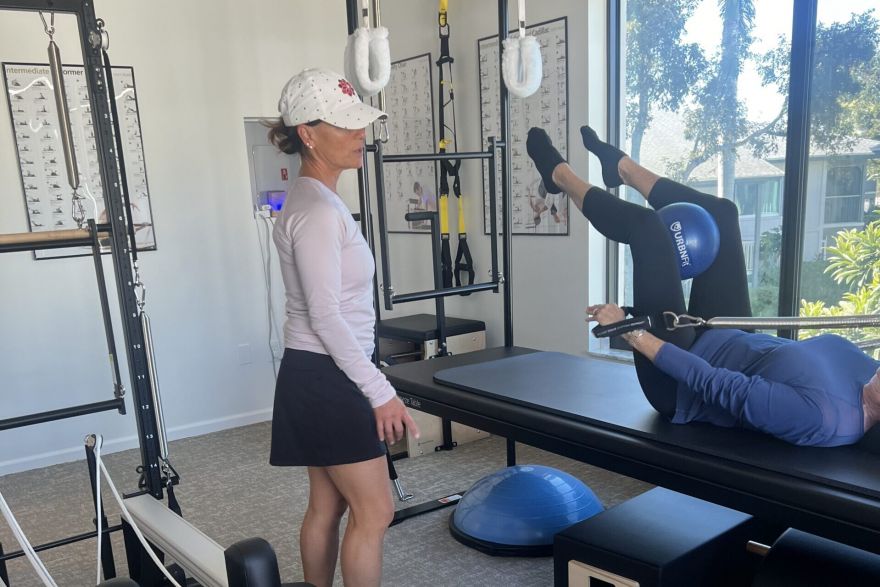
Private Pilates is one-on-one instruction tailored to the individual. Instead of following a preset class sequence, each session is designed for your body, goals, movement history, and any limitations you bring to the studio. 

Every exercise has a purpose, and every adjustment is made in real time.

Unlike group classes, private Pilates allows the instructor to observe movement closely, correct form immediately, and adapt exercises as needed. That level of attention helps clients move more efficiently, reduce unnecessary strain, and build strength in a way that supports everyday life rather than just the workout itself.

How Private Pilates Differs From Group Classes

Group Pilates classes typically follow a shared structure. Everyone moves through the same exercises, often at the same pace, with limited opportunity for individual correction.

While group settings can be motivating, they don’t always account for differences in strength, mobility, injury history, or learning style. In private Pilates, the session is tailored to one person. Exercises can be slowed down, broken apart, or progressed more quickly depending on what the body needs that day. 

For someone recovering from surgery, managing chronic pain, or returning to movement after time away, that flexibility makes a meaningful difference.

Why One-on-One Instruction Matters

No two bodies move the same way. Private Pilates allows training to reflect that reality. Sessions evolve based on how you respond, not on a predetermined plan. If something feels off, it’s adjusted. If progress is happening faster in one area than another, the focus shifts.

This individualized approach supports better movement patterns, clearer body awareness, and more sustainable results over time. For many clients, it’s the difference between simply exercising and actually improving their movement.

Personalized Instruction for Every Body

One of the biggest advantages of private Pilates is personalization that goes beyond basic modifications. Every session is shaped by how your body moves, what it needs support with, and what you want to improve. 

There’s no pressure to fit into a preset routine or keep pace with a group. The work adapts to you, not the other way around.

This level of personalization allows Pilates to meet people where they are. Whether that means rebuilding strength after an injury, improving mobility, or developing more control and stability for long-term health.

Addressing Injuries, Pain, and Mobility Limitations

Many people turn to private Pilates after experiencing pain, surgery, or limited mobility. One-on-one sessions allow careful work around sensitive areas while still building strength and coordination. 

Movements can be modified immediately, resistance adjusted, and rest built in as needed.

This approach supports safer movement patterns and helps clients regain confidence in their bodies. Over time, consistent, targeted work often leads to improved comfort in daily activities such as walking, standing, lifting, or getting up from the floor.

Adapting to Experience Level and Goals

Private Pilates works just as well for beginners as it does for experienced clients. 

For someone new to Pilates, sessions focus on learning foundational movement, breathing, and alignment without feeling rushed or overwhelmed. For more advanced clients, training can become more dynamic and specific, building strength, control, and precision.

Because sessions aren’t locked into a fixed format, progress can happen at a pace that feels challenging but manageable. That balance helps prevent burnout and supports long-term consistency.

Supporting Athletic Performance and Recovery

Athletes often use private Pilates to complement their primary training. One-on-one instruction allows sessions to target sport-specific needs, such as rotational strength, hip stability, or shoulder control. 

This focused work can help improve efficiency, reduce compensations, and support recovery between intense workouts. By addressing imbalances early and reinforcing better movement patterns, private Pilates becomes a tool not just for performance, but for staying active and resilient over time.

Enhanced Safety and Support

Safety is one of the most overlooked benefits of private Pilates and one of the most important. With one-on-one instruction, every movement is closely observed and adjusted as needed. That level of attention helps reduce strain, reinforces proper alignment, and supports steady, confident progress.

Rather than pushing through discomfort or guessing whether an exercise is being done correctly, clients receive immediate feedback. This creates a safer environment for building strength and mobility, especially for those with past injuries or movement limitations.

Reducing Risk for Seniors and Rehab Clients

As we age, balance, bone density, and joint health become bigger concerns. According to the CDC, falls remain one of the leading causes of injury among older adults. 

Private Pilates allows exercises to be adapted to current strength and stability levels, helping improve balance and coordination without unnecessary risk.

For clients recovering from surgery or managing chronic conditions, one-on-one sessions provide structure and reassurance. Movements are introduced gradually, equipment is used for added support, and progress is guided by how the body responds, not by a class schedule.

Building Confidence Through Expert Guidance

Many people hesitate to return to exercise after an injury or prolonged inactivity. Private Pilates helps rebuild trust in the body through clear instruction and steady progression. Knowing that someone is watching closely, correcting proper form, and adjusting exercises in real time makes movement feel more approachable.

Over time, that confidence carries beyond the studio. Clients often report feeling more secure in everyday tasks, from walking on uneven surfaces to lifting objects or moving more freely throughout the day.

Faster Progress Through Focused Attention

One of the clearest differences clients notice with private Pilates is how quickly progress becomes visible. With the instructor’s full attention on one person, time is spent on exercises that actually support improvement, rather than working around a generalized class plan.

Corrections happen immediately. Small adjustments to alignment, breath, or sequencing add up quickly. This helps the body move more efficiently and reduces habits that slow progress or lead to discomfort.

Tracking Meaningful Improvements

In private sessions, progress is measured in practical ways. Improved balance, easier transitions between movements, increased range of motion, and better posture often show up before traditional fitness markers do. 

Many clients also notice everyday changes, such as less stiffness in the morning or more ease with daily tasks.

Because sessions are individualized, progress can be tracked and adjusted over time. When something works, it’s built upon. When something stalls, the approach shifts. That flexibility helps keep training effective and engaging.

Adjusting Sessions for Real-Life Needs

Bodies don’t feel the same every day. Private Pilates allows sessions to reflect that reality. If someone arrives feeling fatigued, sore, or stressed, the focus can shift toward restorative work. If energy is high, sessions can become more challenging.

This adaptability helps maintain consistency without forcing the body into rigid expectations. Over time, it supports steady improvement while respecting recovery and overall well-being.

Benefits for Special Populations

Private Pilates is especially effective because it adapts to the needs of different bodies and life stages. Rather than asking clients to fit into a standard program, one-on-one sessions allow Pilates to support mobility, recovery, and performance in ways that feel relevant and sustainable.

This flexibility makes private Pilates a strong option for seniors, post-rehab clients, and athletes alike.

Improving Mobility and Strength Over Time

For adults focused on maintaining mobility and independence, private Pilates emphasizes controlled strength, joint stability, and balance. 

Exercises are chosen to support everyday movement, such as standing up from a chair, getting in and out of bed, ascending and descending stairs. 

The Improved core connection from Pilates training provides better balance while walking.  

Strengthening the postural muscles improves back strength and will alleviate pain related to poor posture and weakness.

Pilates will allow you to stand taller, feel stronger and support your posture with all activities.

Targeted Support After Surgery or Injury

Clients recovering from joint replacement or orthopedic procedures often benefit from private Pilates because sessions can be adjusted week by week. Movements stay within safe ranges while gradually rebuilding strength and control around affected joints.

This measured progression helps support healing without rushing the process. Equipment-based Pilates, in particular, allows resistance and support to be fine-tuned with modifications and props allowing progression to be safe and effective.

Performance Support for Athletes

Athletes use private Pilates to address imbalances, improve movement efficiency, and support recovery between training sessions. One-on-one instruction allows exercises to reflect the specific demands of a sport, whether those demands involve rotation, stability, or controlled power.

By reinforcing better movement patterns and addressing weaknesses early, private Pilates helps athletes stay active and reduce the risk of overuse injuries.

Choosing the Right Private Pilates Studio

The benefits of private Pilates depend heavily on where and with whom you train. A high-quality studio provides more than just equipment. It offers knowledgeable instruction, thoughtful programming, and an environment that supports safe, effective movement.

When evaluating private Pilates options, a few key factors can help guide the decision.

Instructor Training and Certification

Instructor credentials matter, especially in one-on-one settings. Look for studios led by certified Pilates instructors with comprehensive training from established programs. 

Advanced education and continuing training indicate a deeper understanding of anatomy, movement mechanics, and injury considerations. Experienced instructors are better equipped to recognize compensation patterns, adapt exercises appropriately, and guide progress safely over time.

Equipment Quality and Studio Environment

Well-equipped studios invest in professional Pilates apparatus such as reformers, Towers, Cadillac tables, and barrels. These tools allow sessions to be customized for both support and challenge, depending on the client’s needs.

Beyond equipment, the studio environment should feel focused, welcoming, and professional. A calm, well-organized space helps clients stay present and comfortable, which directly supports better movement and learning

Frequently Asked Questions About Private Pilates

Here are common questions about private pilates.

1) What is private Pilates?

Private Pilates is one-on-one Pilates instruction with a certified instructor. Each session is tailored to the individual’s entire body, goals, and movement needs rather than following a set class format. 

This approach allows exercises to be selected, modified, and progressed based on how the body moves that day. It also provides more opportunities for feedback, correction, and focused learning.

2) Are private lessons worth it?

Private Pilates is worth it for people who want personalized guidance, safer movement, and more efficient results. Because sessions are customized, time is spent on exercises that directly support progress rather than on generalized routines. 

Many clients find they improve faster and feel more confident in their movement compared to group classes.

3) Who benefits most from private Pilates?

Private Pilates benefits a wide range of people, including beginners, seniors, athletes, and those recovering from injury or surgery. 

It is especially helpful for anyone who needs individualized attention or movement modifications. Clients with specific goals, such as improving mobility, managing pain, or enhancing athletic performance, often see the greatest benefit.

4) How often should you do private Pilates?

Most clients benefit from two to three private Pilates sessions per week. The ideal frequency depends on goals, experience level, and recovery needs. 

5) Is private Pilates workout good for injury recovery?

Private Pilates is commonly used to support recovery after injury or surgery because sessions can be carefully adapted. 

Exercises stay within safe ranges while gradually rebuilding strength, stability, and control. One-on-one instruction also allows progress to be adjusted as healing continues, helping clients move forward with confidence.

6) What’s the difference between private Pilates and group Pilates classes?

The main difference is attention and customization. Group Pilates follows a shared structure, with limited ability to adjust exercises for individual needs.

Private Pilates is designed entirely around one person, allowing pace, equipment, and exercises to change in real time based on how the body responds.

Is Private Session Pilates Right for You?

Private Pilates offers a focused, personalized approach to movement that supports safer training and more consistent progress. One-on-one instruction allows each session to reflect how your body moves, what it needs support with, and where you want to improve, without rushing or forcing results.

Whether the goal is improving mobility, recovering from injury, or supporting athletic performance, private Pilates adapts to real-life needs. Progress builds steadily through thoughtful programming and experienced guidance, helping movement feel stronger and more confident over time.

If you’re exploring private Pilates, working with a studio that prioritizes individualized care makes all the difference. At The Pilates Firm in Naples, private sessions are designed around your goals from the start. Scheduling an introductory session is a simple way to learn more, ask questions, and experience one-on-one Pilates firsthand. Connect with us today!


Individual Training
Tailored Results

We Are Hiring!

Looking to make a change in your current work situation or to relocate/winter in beautiful Naples Florida?

The Pilates Firm is seeking motivated, qualified trainers to join our team! We offer generous compensation and private training rooms with brand new Merrithew equipment.

Interested? Email Wendy your resume [email protected]